✺
// Passion is the word we use for the thing that won’t stay controllable — and we never quite admit how close it sits to ruin. So…, this Ramble gets passionate about passion, whilst asking some compassionate questions about passion’s passionate excess.
Passion.
This theme is everywhere. Words hardly do it justice - it’s an emotion that’s “strong and barely controllable”.
It’s “intense”.
It “compels action”.
And it’s often directly related, triggered, or driven by a “particular person or thing”.
But it’s best seen through the works, ideas, and events it inspires. So hop up on the content couch and let’s take a look.
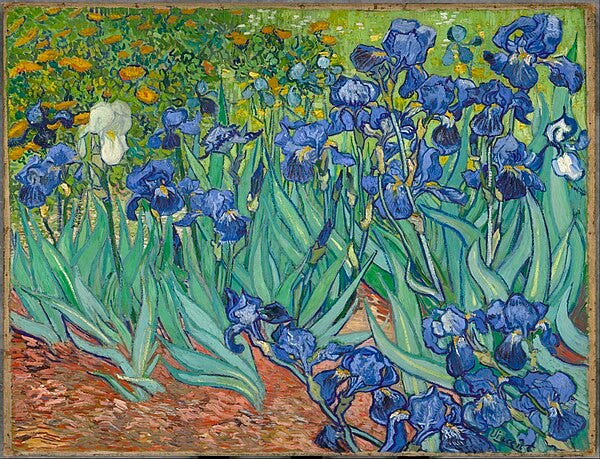
Van Gogh’s Irises
Source: Wikipedia
One part of Passion is hidden between closed mouths — countless desires, wishes, thoughts, and goals that we never give words to.
Van Gogh, everyone’s favourite one-eared savant, was no stranger to passion. That ear was lost in a fit of it, sliced and delivered to the love of his life.
Yet, not all of his emotions were poured out through self-inflicted violence. Instead, they were poured out on canvases.
It’s May 1889, and Van Gogh has entered a mental asylum. Within a month, he has begun painting Irises. Yet, this painting was not filled with strokes of boredom, but with deep desire to avoid falling off the cliff of sanity. In his words, Irises became “the lightning conductor for my illness”. His passion for painting saved him from himself.
So which is it — the fire that drives us mad, or the fire that saves us from the madness? With Van Gogh you can’t separate them, and maybe that’s the point: the conductor and the lightning are the same current.
Martin Scorsese’s The Last Temptation of Christ (1988)
Source: Rotten Tomatoes
Passion also means to suffer. For someone or something to act upon on — the well-known example of the Passion of Jesus.
Scorsese has a deeply spiritual side that comes to life every decade or so, namely through his trilogy of 1988’s The Last Temptation of Christ, 1997’s Kundun, and 2016’s Silence.
But it’s not Christ’s Passion I want to focus on. Nor Scorsese’ religious fervour.
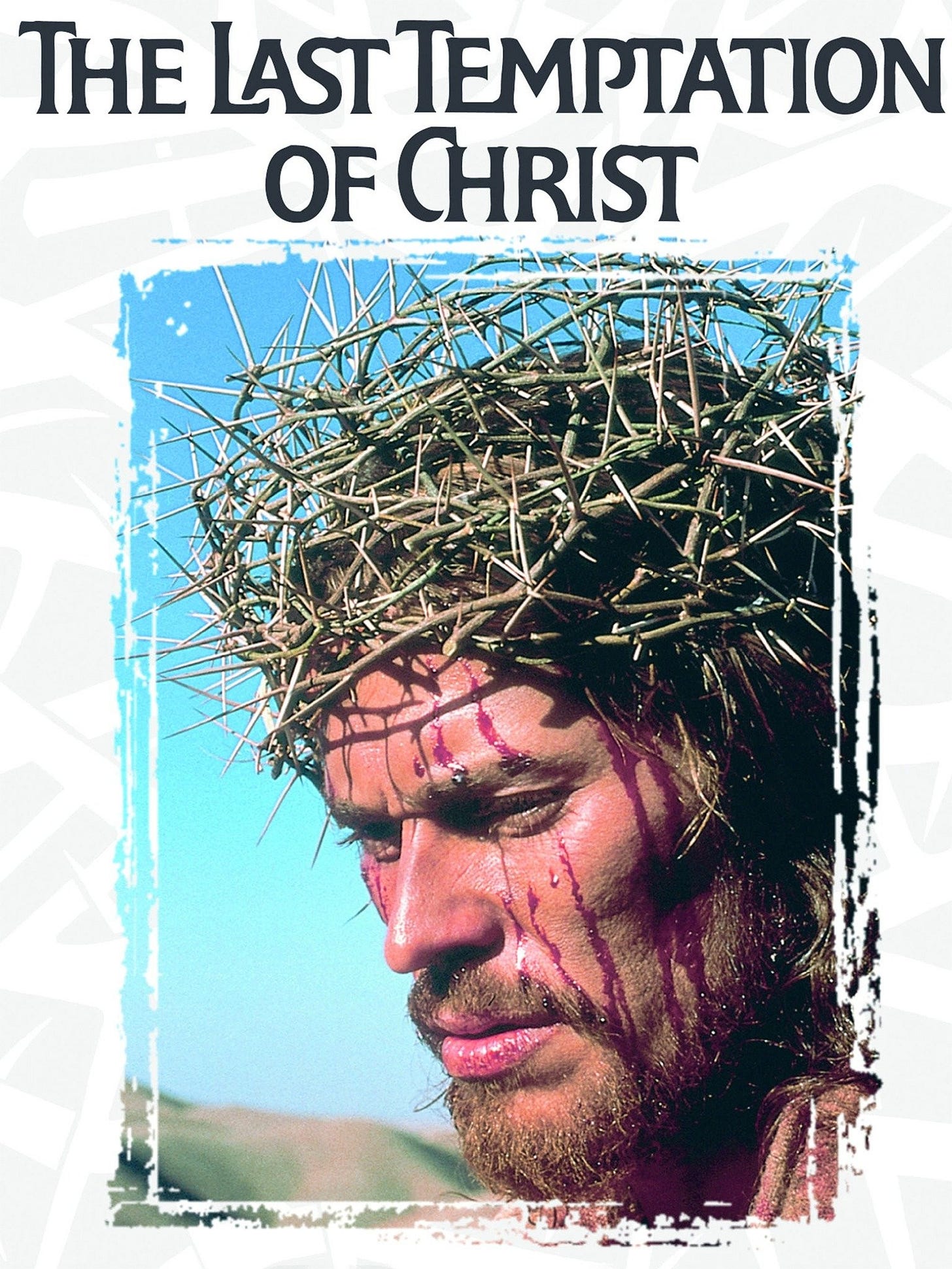
I’m not interested in Christ’s passion here, but in the audience’s. I want us to consider the power of the media in igniting the passion of the viewer. It even lead Nuns to declare Scorsese’s Last Temptation as “the most blasphemous ridicule of the Eucharist that’s ever been perpetrated in this world.”
And it doesn’t stop there.
October 22nd, 1988, and a small Catholic group set fire to a Parisian cinema showing the film. 13 people were injured by the incendiary device.
Something about telling a story in the ‘wrong’ way can make us so angry & offended that we detonate our devotion into violence.
The question on charred lips: should a film be made even if it’s certain to wound? The arsonists and the artist agreed on one thing: the image mattered enough to burn for.
(Very Jesus-esque, I do say!)
Sudden Gamer Death: The Line Between Passion and Addiction
Source: Midjourney
Passion is also spoken about openly and worn as a mark of pride — “I’m deeply passionate about saving the planet”.
Yet, could this passion simply be a dolled-up presentation of an addiction gnawing at our insides? Addiction in formalwear!
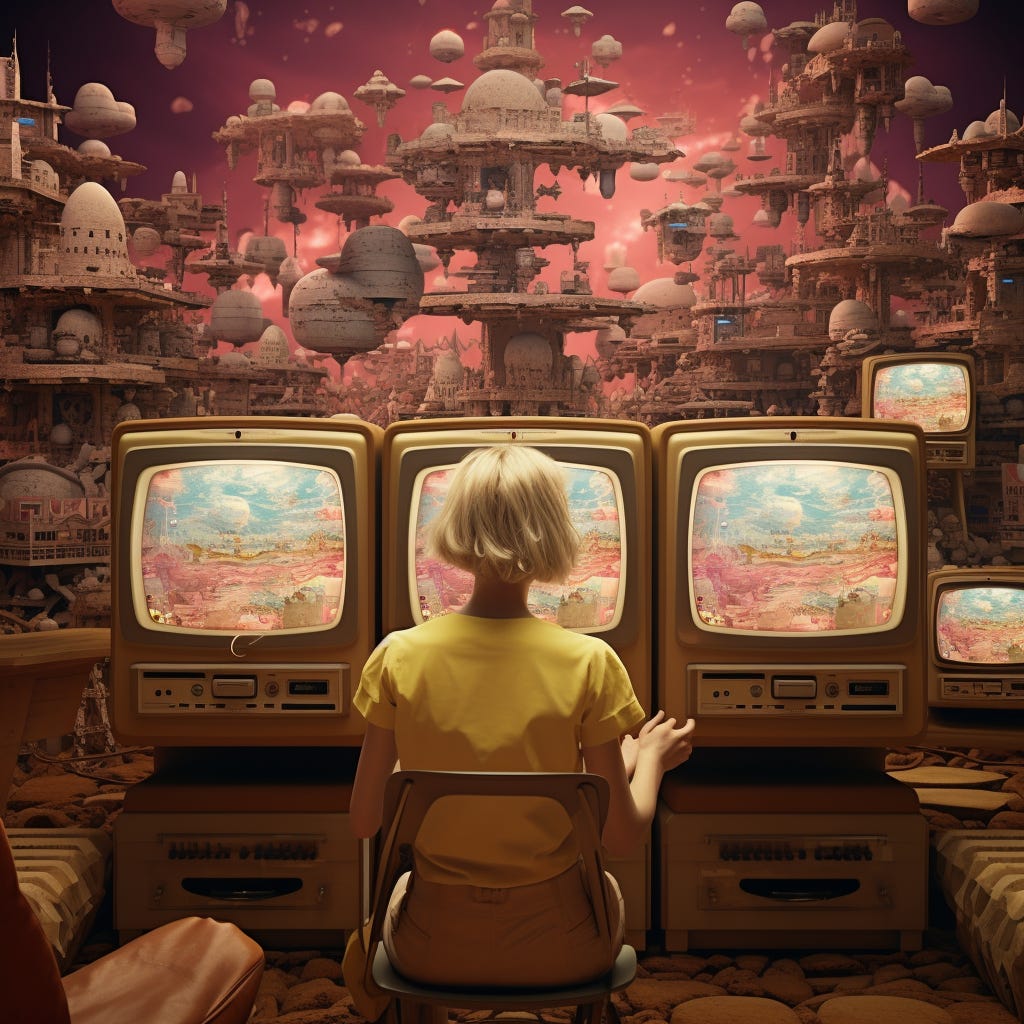
Consider video games. In the West, binges happen behind closed doors. But in countries such as Taiwan, where internet cafes are popular, gaming binges happen publicly, even to the extent that people die from exhaustion playing it.
December 2022, Diana Kuperczko et al. release an article called “Sudden gamer death: non-violent death cases linked to playing video games” in the BMC Psychiatry journal. They explore Internet Gaming Disorder (IGD), focusing on 24 specific cases sudden death seized gamers in the midst of marathon virtual sessions.
IGD is on a spectrum. As the authors put it: “Someone with IGD often spend several hours a day gaming, but in extreme cases the gamer may spend days online, consecutively, with little food or drink intake or sleep, which may lead to adverse (or fatal) physiological conditions.”
Sleep deprivation. Stress. Dehydration. Staying sedentary. Viewed in a different light, don’t we often see these states as a mark of true passion? Perhaps, of genius?
Where, precisely, is the line between the passion we praise and the addiction we pity — and are we sure we can see it?